
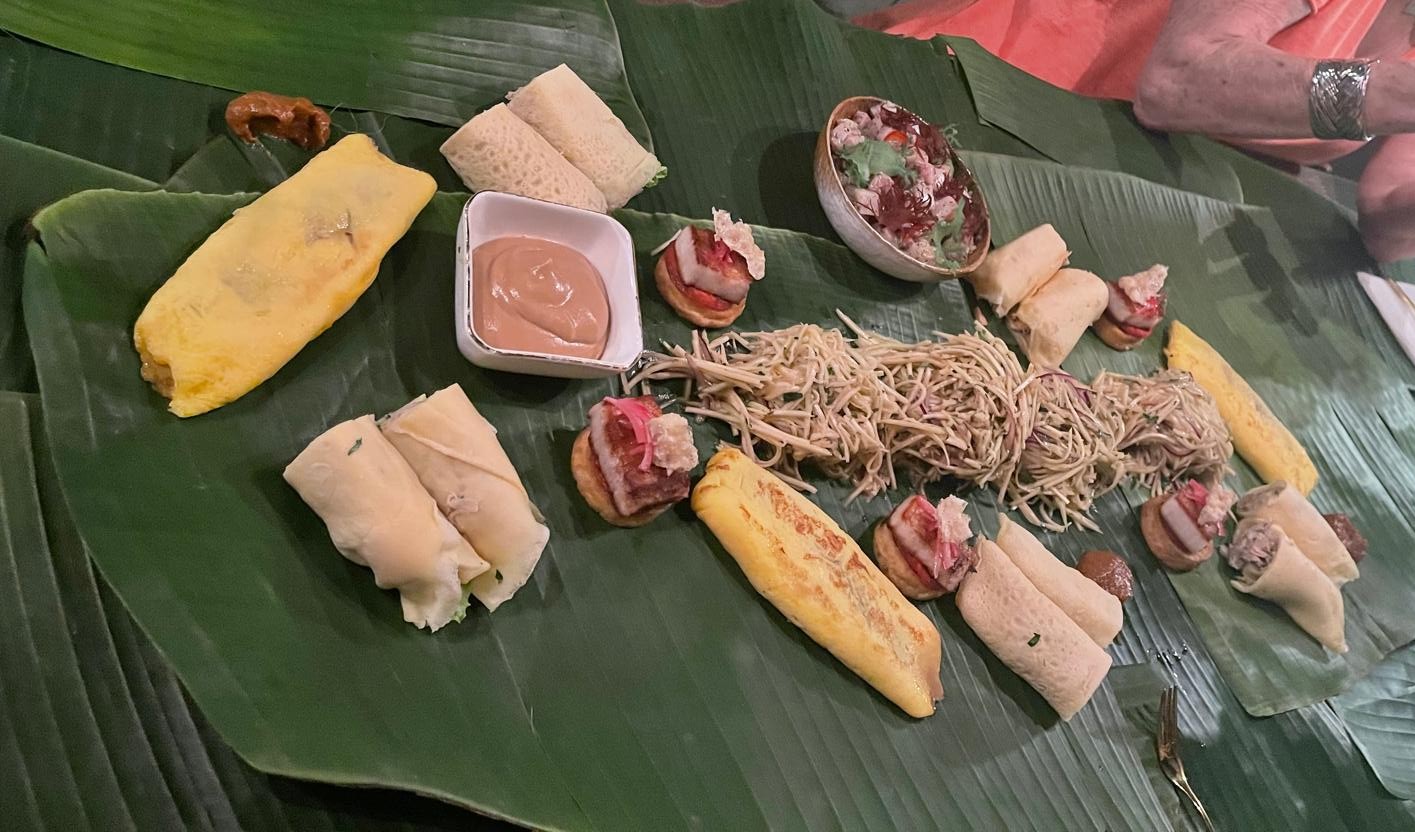
Slow Food Hong Kong has just recently enjoyed an unforgettable Filipino “bougie boodle fight” dinner at Brut! in Sai Ying Pun, crafted by their outstanding Chef CJ.
Renowned for his elevated Western and international cuisine, CJ who hails from The Philippines and who has called Hong Kong home for years, showcased the best of his country’s heritage. The result was a vibrant celebration of Filipino culture, bursting with bold, fresh flavors and communal joy.
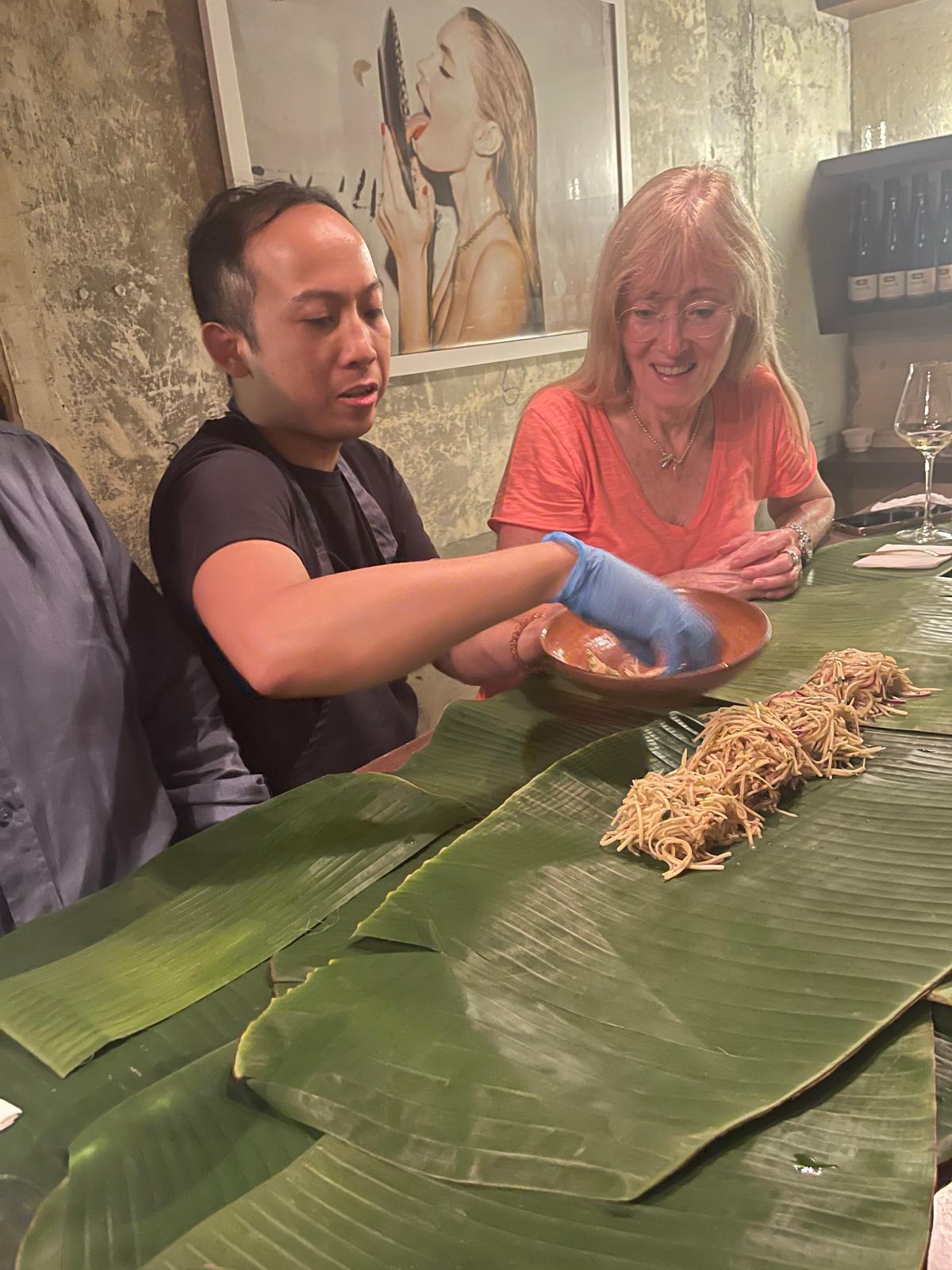
Served on vibrant banana leaves, the meal was a hands-on affair, true to boodle fight tradition—no cutlery, just fingers, and plenty of enthusiasm. The menu highlighted locally sourced, impeccably fresh ingredients, elevated by the rare Asin Tibuok, a Slow Food Ark of Taste Filipino coconut salt that added a smoky, nuanced depth. Highlights included delicate fresh spring rolls with chicken, crispy fried tofu with succulent pork belly, and a zesty green mango salad with smoked mackerel. The hamachi kilawin tartare was refreshing, while mini tuna steaks with coconut jus delivered luxurious flavor. Barbecue chicken, aromatic garlic rice, stewed morning glory, and an eggplant omelette roll completed the feast. Dessert, a not-too-sweet ube biko (black sticky rice cake) with mango, was a perfect ending to a very traditional feast.
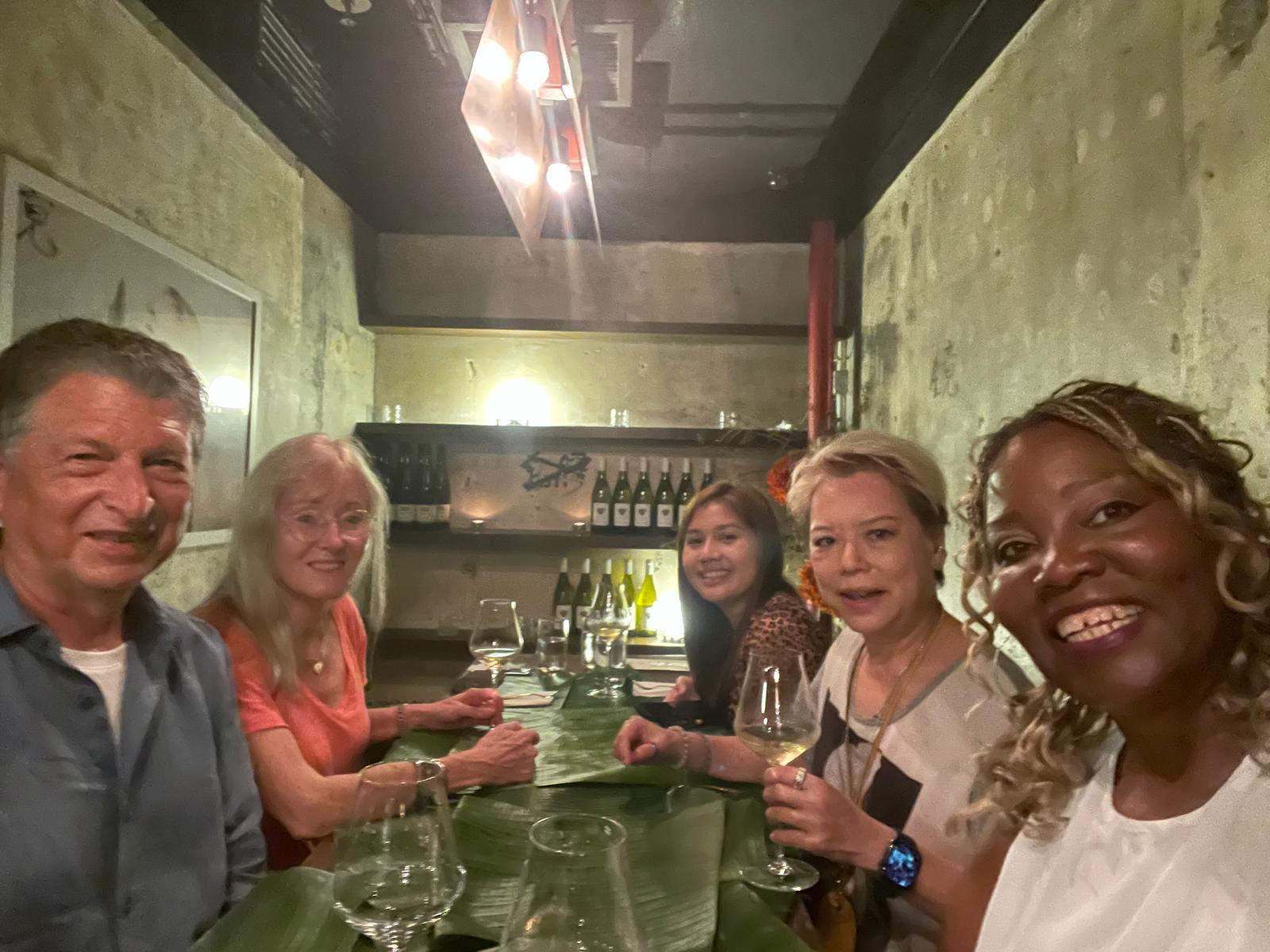
Eating with our hands from banana leaves fostered a sense of Filipino hospitality, making every bite a shared delight. The optional wine pairings, expertly curated by Cami, the owner of Brut!, complemented the dishes beautifully.
The History of Boodle Fight Dinners
Originating from the Philippines, a boodle fight is a communal dining tradition rooted in military culture, where soldiers would gather around a table covered with banana leaves, piled high with food, and eat together using their hands. The term “boodle” comes from the slang for a group meal, symbolizing camaraderie and equality. Today, it’s a festive way to bring people together, celebrating abundance and connection through shared plates and vibrant flavors.
Chef CJ’s take at Brut! elevates this tradition with a “bougie” twist, blending heritage with culinary artistry while staying true to its roots. With locally sourced ingredients and the unique touch of Asin Tibuok, this boodle fight was a masterclass in Filipino pride and flavor. Don’t miss the next one!
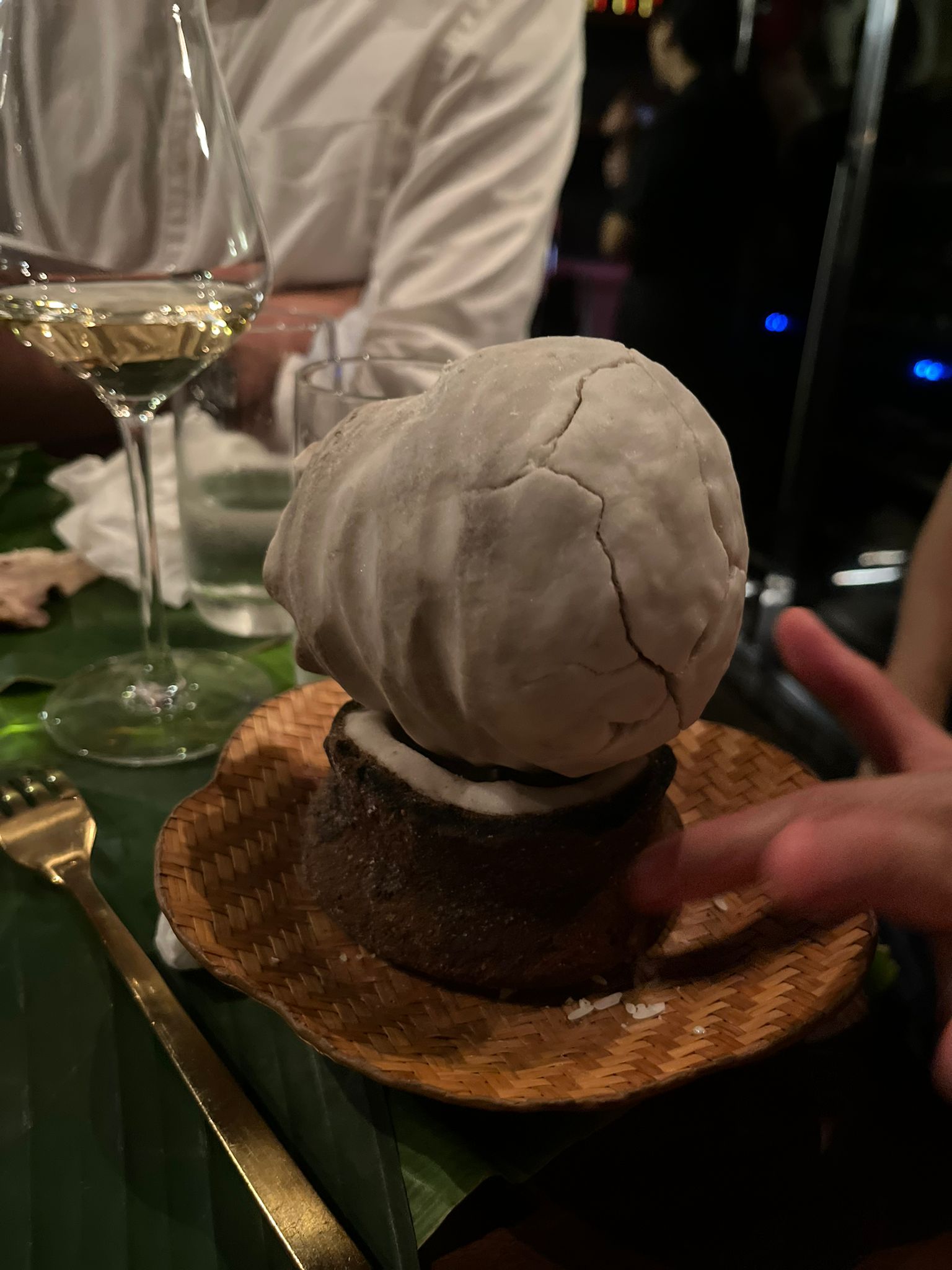
More about Asín Tibuok — a rare and endangered Filipino artisanal salt listed in the Ark of Taste by the Slow Food movement.
- It’s made using a pre-Hispanic method by the Boholano people in the Philippines.
- Coconut husks are soaked in seawater for months, then burned to ash.
- Seawater is filtered through the ash to create a brine, which is boiled in clay pots until it solidifies into a dome-shaped salt mass.
- The final product is often nicknamed the “dinosaur egg” because of its appearance.
Its flavour profile is smoky, earthy, and subtly fruity — not coconut-flavored, despite the process involving coconut husks.
Only a handful of families still produce Asín Tibuok, making it one of the rarest salts in the world and a treasured piece of Filipino culinary heritage.